|
|
|
 |
|||||||
 |
|||||||
 |
|||||||
 |
|||||||
|
|
|
|
|
|
|
|

Business Structure
CNG Group





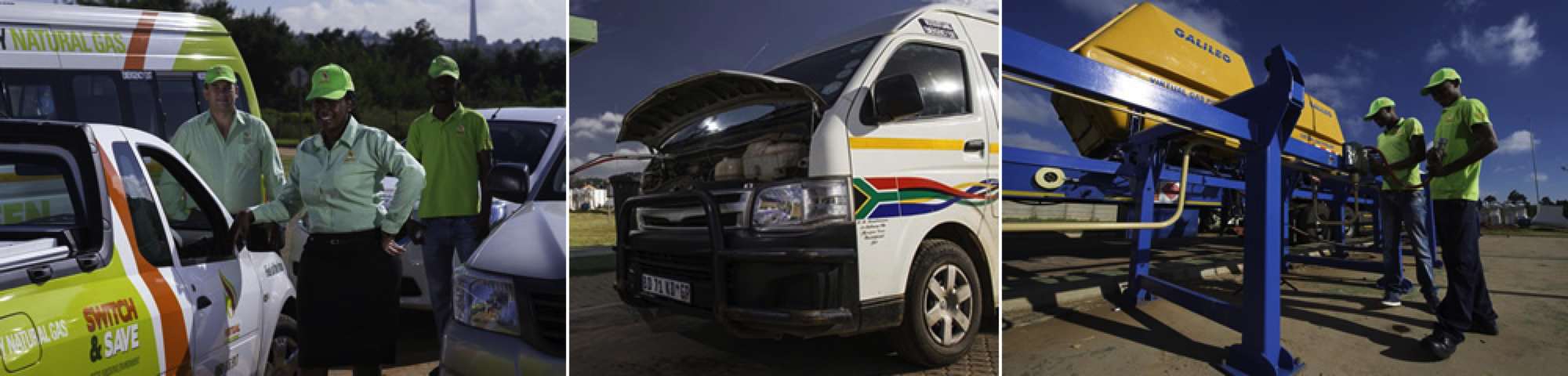

CNG Holdings
CNG Holdings was born in 2008 when the idea that Natural Gas could become an alternative energy source for industry and fuel for vehicles became too compelling to ignore.
SANEDI (South African National Energy Development Institute) issued an open tender in 2008/2009 to investigate the feasibility of establishing a Compressed Natural Gas (CNG) bus and taxi filling station in Gauteng. The CNG Group was awarded this tender due to the shareholders’ extensive knowledge and experience in the CNG market as well as the transport and industrial industries. The Group could also demonstrate the ability, and had the knowledge, to distribute gas where there is no pipeline by means of an innovative road transport system.
The outcome of the tender indicated that CNG was not only a viable and cost-effective alternative fuel, but could also create a new employment sector. Opportunities for skills transfer and downstream job creation would be created by vehicle conversions, establishing and operating CNG filling stations and trailer manufacturing to transport CNG.
Pilot phase
In 2009, CNG Holdings’ private shareholders funded a R30 million pilot phase for Compressed Natural Gas. The company identified a specific site at Langlaagte, Johannesburg, to set up a “Mother Station” where it could compress gas and distribute it via an innovative road transport system. This site is situated next to Egoli Gas and at Sasol’s main supply point to Egoli’s gas network.
The Langlaagte site was one of the few areas where Natural Gas could be supplied at around 30 Bar, a sufficiently high enough pressure to facilitate greater compression and allow more Natural Gas to be distributed per trailer.
After a satisfactory Environmental Impact Assessment (EIA) study, the National Energy Regulator (Nersa) issued a licence to distribute Natural Gas in Gauteng and KwaZulu-Natal.
Virtual gas pipeline
Due to the lack of an integrated and substantial pipeline, there is limited opportunity for customers to access Natural Gas. CNG Holdings established Virtual Gas Network to fill the gap within the South African market and supply CNG via road to end-users. The Virtual Gas Network solution is to use MAT/Truck Trailer modular systems, which are transported by road. This virtual gas distribution network means that any customer within a 300-km radius of the compression site can now operate on Natural Gas.
Industrial customers have been receiving CNG via the road distribution system since 2011. At the Compression (Mother) Station dispensers have been supplying CNG for vehicles to various end users from 2010. The results of in-situ testing at industrial customer sites and with government and private fleets were independently audited and verified and substantial savings in fuel and operating costs were recorded.
Expansion plans
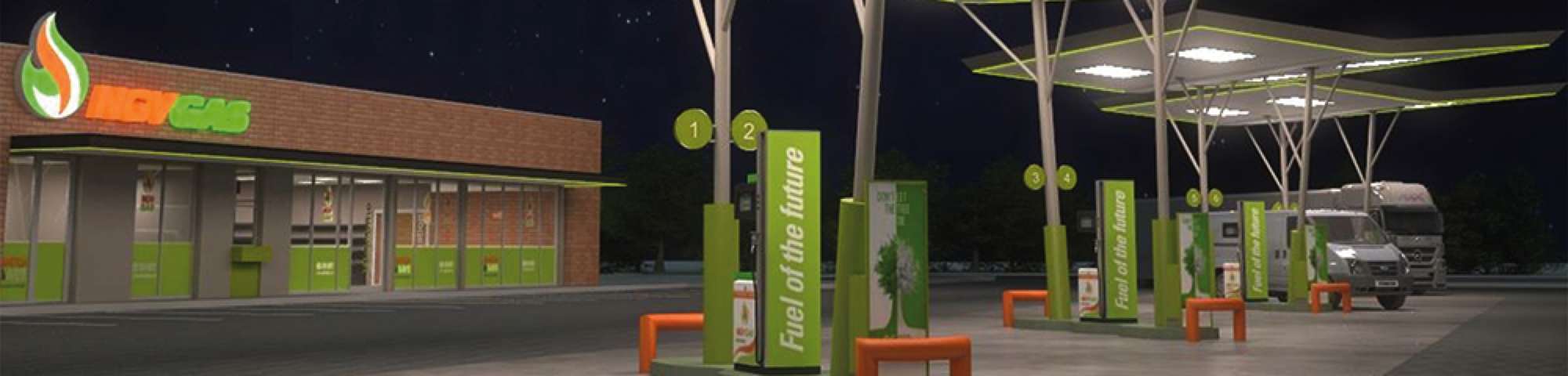
In April 2013, the Industrial Development Corporation (IDC) took up 26% equity in CNG Holdings and provided funding for expansion. These plans include growing the industrial customer base, increasing the number of in-house filling stations and retrofitting filling stations to service Natural Gas Vehicles. Phase 1 will see a flagship filling station and information centre set up in Langlaagte, plus six satellite and retrofitting stations operating by mid-2014.
Subsidiaries
CNG Holdings owns 100% equity in its three operating companies: Virtual Gas Network, NGV Gas and CNG Technology.
1. Virtual Gas Network (Pty) Ltd supplies CNG via a road distribution system to refuelling stations and customers who have no direct access to the existing gas network.
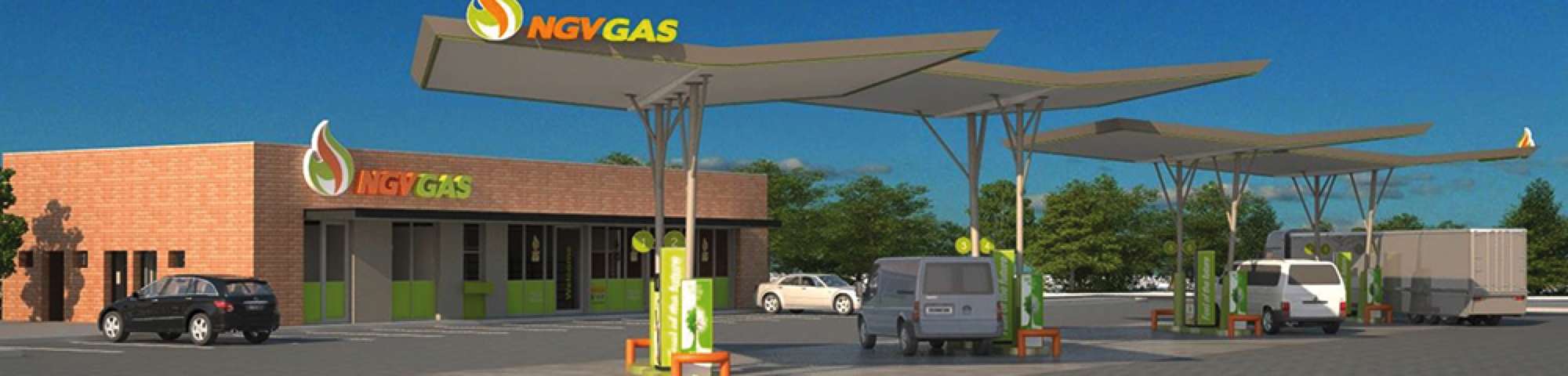
2. Natural Gas Vehicles (Pty) Ltd (NGV Gas) specialises in providing turnkey solutions to all industrial users and fleet owners who wish to use CNG. It also establishes CNG filling stations for both the private and public transport sectors. NGV Gas works with existing filling stations to determine whether they can be retrofitted for Natural Gas Vehicles.
3. CNG Technology (Pty) Ltd funds and services conversion kits for vehicles and will help train people to manage registered conversion workshops to retrofit existing petrol- or diesel-operated vehicles. In 2014/15 it aims to fund and convert 1 000 taxis to run on CNG.